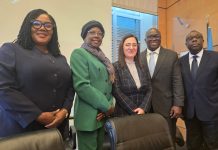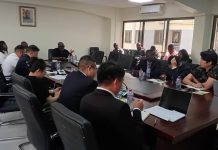


The Ghana Anti-Corruption Coalition (GACC), led by its Programmes Assistant, Ms. Dorcas Affum Tenkorang, has sensitised residents of the Techiman North District on the mandate of the Office of the Special Prosecutor (OSP) and the critical role citizens must play in the national fight against corruption. The forum, held on Friday, November 28, 2025, took place at the Royal Gardens Hotel in Tuobodom in the Bono East Region and was attended by 30 participants drawn from selected institutions within the district.
Ms. Dorcas Affum Tenkorang took participants through a detailed presentation on what corruption is, how it manifests, and how it affects national development. She explained that corruption drains state resources, destroys public trust, and worsens poverty, inequality, and poor service delivery.
She further led discussions on the definition and manifestations of corruption, the background and purpose of establishing the OSP, and the scope of offences the OSP investigates and prosecutes. She highlighted the impact of the OSP’s work, its reporting obligations, and the challenges that weaken Ghana’s anti-corruption efforts. She also stressed the crucial role citizens must play in resisting, rejecting, and reporting corruption.
According to her, the program aims to strengthen the effectiveness of government agencies, enhance the participation of civil society, particularly women, youth groups, and the media in policymaking and accountability, and promote digitalisation and collaboration among anti-corruption actors within the criminal justice chain.
In an interview with our reporter, she disclosed that GACC organised the event as part of the Strengthening the Rule of Law and the Fight Against Corruption project under the Participation, Accountability and Integrity for a Resilient Democracy programme. The initiative, she stated, is sponsored by GIZ with funding support from the European Union and the Swiss State Secretariat for Economic Affairs.

“Today’s forum is part of a project titled Strengthening the Rule of Law and the Fight Against Corruption, which falls under the Participation, Accountability, and Integrity for a Resilient Democracy initiative.
“The project is sponsored by GIZ, with funding support from the European Union and the Swiss State Secretariat for Economic Affairs. The main purpose of this forum is to sensitize the populace about the mandate of the Office of the Special Prosecutor (OSP). We want citizens to fully grasp the importance of the OSP in the fight against corruption and corruption-related activities in the country, as well as understand the vital roles we, as citizens, play in this fight,” she said.
As part of the presentation, she reminded participants that corruption is committed by both public and private actors who abuse entrusted power for personal or third-party gain. She explained various forms of corruption, including bribery, extortion, fraud, embezzlement, nepotism, favouritism, facilitation payments, and conflict of interest.
She also outlined why the state created the OSP under Act 959, referencing Ghana’s commitments to international and regional conventions such as the United Nations Convention Against Corruption, the African Union Convention on Preventing and Combating Corruption, and ECOWAS protocols.
In detailing the accomplishments of the OSP, she explained that the office has handled nine major prosecutions between 2022 and 2025, involving high-profile public officers and politically exposed persons. These cases include the NPA case involving Mustapha Abdul Hamid and nine others, the imported rice case involving Issah Seidu and three others, the payroll fraud case involving Tahidu Yakubu and five others, the sale of GES appointment letters involving Ibrahim Kofi Sessah and Gloria Acquah, and the galamsey-related case involving Charles Bissue and two others. Earlier cases such as the procurement breaches involving Adjenim Boateng Adjei at the PPA, the bribery case involving Alexander Kwabena Sarfo-Kantanka, and the NDA case involving Sumaila Abdul-Rahaman and others were also highlighted as landmark prosecutions.

She informed participants that the OSP has secured seven convictions within the period, resulting in significant financial recoveries for the state. Among those convicted are Andy Thomas Owusu in the galamsey case, where GHC 206,000 was recovered, and seven individuals in the payroll fraud case, which saved the state more than GHC 34 million, with an additional GHC 106,318.95 refunded. These achievements, she noted, demonstrate the increasing impact of the OSP in safeguarding public resources and holding offenders accountable regardless of their status.
The Programmes Assistant for the Ghana Anti-Corruption Coalition further revealed that similar forums are being organised across 60 districts in all 16 regions, supported by ongoing radio sensitisation programmes aimed at deepening public understanding of the OSP’s mandate and enhancing community participation in Ghana’s anti-corruption agenda.
“This project is being implemented in 60 districts across all 16 regions of the country. Apart from the forum, we are also conducting radio talk shows to enhance public sensitization,” she said.
As part of this broader national rollout, GACC on Monday, 1st December 2025, organised a similar sensitisation programme for residents of the Techiman South Municipality. That session, held at the Business Advisory Center, brought together 30 participants drawn from carefully selected institutions within the municipality to receive education on corruption, the mandate of the OSP, and their roles as citizens in the fight against corruption.
The Executive Director of COPIO and GACC focal person for the Bono East Region, Mustapha Maison Yeboah, on his part disclosed that the program focuses on the institution rather than the individual occupying the office, stating that corruption undermines national development and exposes Ghana to multiple crises.

According to him, citizens’ understanding of corruption, the institutions tasked with combating it, and their civic responsibilities is crucial in the fight against corruption.
“Today’s program focuses on the mandate of the Office of the Special Prosecutor. The emphasis is on the institution itself, not the individual who currently occupies the office. We have learned that corruption is an enemy to the state, as it slows development and exposes the country to various crises. Therefore, if we all understand what corruption is, the institutions mandated to fight it, and our responsibilities as citizens, it will go a long way in strengthening the national fight against corruption,” he told our reporter.
He further urged citizens to report corruption-related activities to the appropriate authorities or, if necessary, to COPIO, which will ensure proper follow-up. He, however, cautioned whistleblowers against publicly disclosing their identities.
“As citizens, we should report any corruption-related activities to the appropriate authorities or, if necessary, to the Centre of Posterity Interest Organization (COPIO), and we will take it from there.
“Most importantly, we must avoid telling others or boasting about blowing the whistle on a corrupt individual or activity, as doing so may endanger our lives.”

The Bono East Regional Director of the National Commission for Civic Education (NCCE), Mr. Joseph Kwaku Yeboah, who was present during both forums at Techiman South and Techiman North described the ongoing anti-corruption sensitization program as “very insightful,” noting that it will deepen public understanding of the mandate and significance of the Office of the Special Prosecutor (OSP) in Ghana’s governance system.
Speaking to our reporter, Mr. Yeboah said the initiative is timely and necessary, as it equips citizens with the knowledge needed to appreciate the OSP’s role in combating corruption and promoting accountability in public office.
“This program is very insightful, as it will help the citizenry understand the importance of the Office of the Special Prosecutor, its mandate, and its impact on the fight against corruption in the country.”
He expressed concern that, despite Ghana’s commitment to several international conventions and treaties aimed at fighting corruption, the practice appears to be gaining ground and gradually becoming normalized in society. This worrying trend, he said, reinforces the need for stronger institutions such as the OSP to safeguard national integrity.
According to him, the establishment of the OSP represents a significant step in Ghana’s efforts to curb corruption through independent investigations, prosecutions, and preventive measures. He commended the Office for its growing impact, noting that its interventions are contributing meaningfully to the national anti-corruption agenda.

“Despite the many international treaties Ghana has signed against corruption, the practice is gradually becoming a new norm, hence the need for the establishment of the Office of the Special Prosecutor.
“So far, the OSP has made a positive impact in the country’s fight against corruption, which is commendable.”
Source: Elvisanokyenews.com